The Evolution of AI Spending: Understanding Microsoft’s Latest Approach
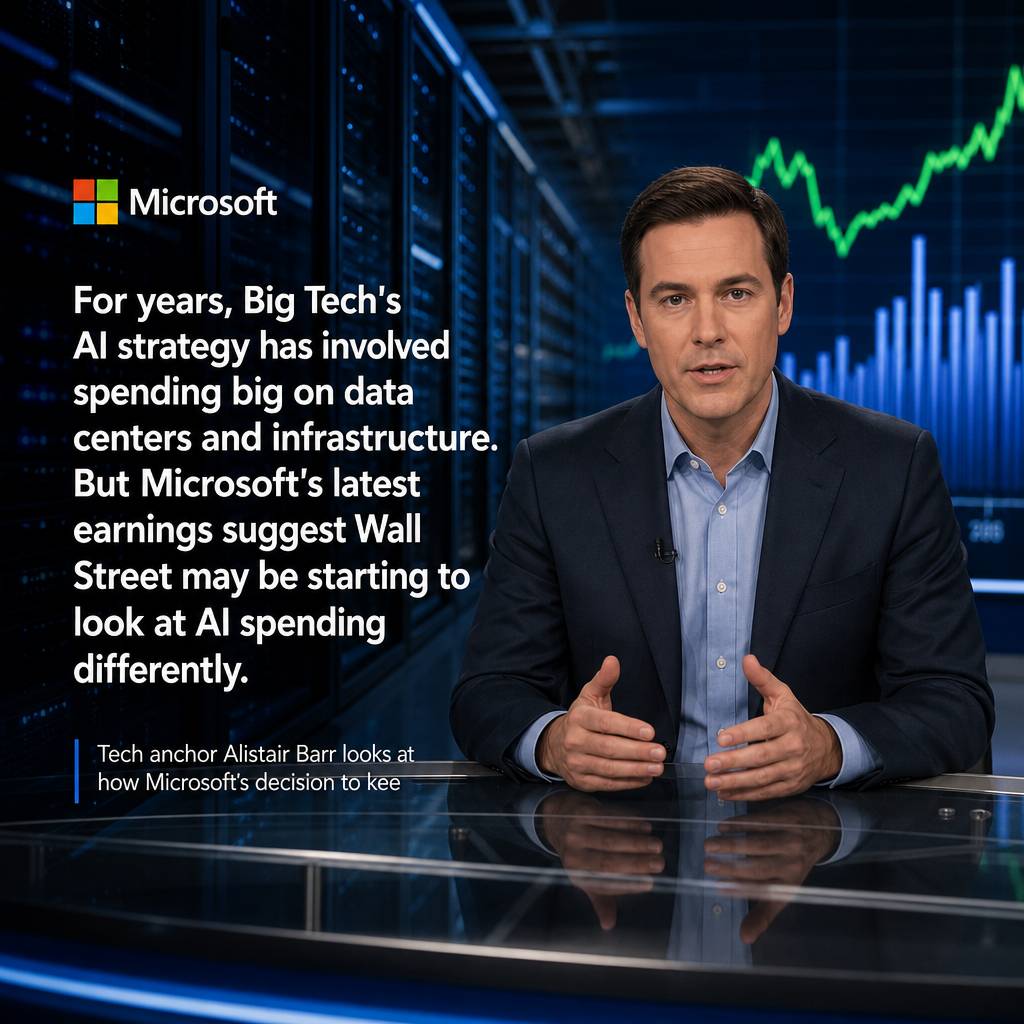
In the tech world, few trends have captured the imagination quite like artificial intelligence. For years, tech giants have positioned AI as a centerpiece of their strategies. However, the approach has often hinged on one key area: substantial investments in data centers and infrastructure. Microsoft’s latest earnings report offers an intriguing shift, sparking a conversation on how Wall Street is beginning to view AI spending through a new lens.
While data centers remain crucial, the earnings report suggests Microsoft’s approach to AI spending is evolving. Instead of solely focusing on physical infrastructure, there’s an increasing emphasis on optimization and strategic deployments. This development could redefine how industry giants allocate resources and shift Wall Street’s expectations in the process. Let’s delve deeper into how Microsoft’s strategy is paving the way for potential changes in AI investments.

Historical Approach to AI Investments
For decades, AI development has been interlinked with significant financial outlays for data centers. Companies believed that to harness AI’s potential, vast amounts of data storage and processing power were non-negotiable. Thus, heavy investments in infrastructure became the norm.
This led to a race among tech giants to establish sprawling data centers worldwide. These investments, while essential, often overshadowed the software and algorithmic advancements that drive AI’s practical applications.
Shift in Investment Patterns
Microsoft’s recent earnings report highlights a pivotal change in this investment paradigm. While data centers remain a component of their strategy, there’s a noticeable shift toward enhancing existing capabilities. The focus is on strategically deploying AI to maximize efficiency and effectiveness rather than merely expanding physical infrastructure.
This nuanced approach suggests that Microsoft is prioritizing smart AI applications that can deliver tangible results without necessarily requiring extensive new infrastructure investments.
Wall Street’s Changing Perception
Historically, Wall Street analysts gauged AI’s progress by the scale of infrastructure investments. Larger data centers and expansive cloud services were viewed as indicators of a company’s commitment to AI.
However, Microsoft’s latest financial figures indicate that strategic AI spending can be just as, if not more, impactful. This shift could influence analysts to recalibrate their metrics, focusing on productivity gains and AI’s ROI instead of sheer infrastructure scale.
The Implications for AI Investments
Microsoft’s refined strategy may serve as a blueprint for other tech companies. Emphasizing strategic and intelligent AI deployments can potentially drive innovation while also being financially prudent.
Companies may begin to explore software enhancements and operational optimizations as central to their AI strategies. This approach not only reduces costs but also accelerates the development and implementation of AI solutions.
- Focus on scalable AI applications
- Emphasize efficiency over expansion
- Innovate through existing resources
Microsoft’s Strategic AI Deployments: A Deeper Dive
Amidst this strategic shift, it’s worthwhile to examine how Microsoft is deploying its AI capabilities. The company is integrating AI into existing services, such as Azure and Dynamics, to enhance functionality and user experience without excessive infrastructure expansion.
This strategy not only underscores the versatility of their existing tech stack but also highlights AI’s transformative potential in improving service quality and operational efficiency.
Table: Comparison of Traditional vs. Strategic AI Investments
| Aspect | Traditional AI Investment | Strategic AI Investment |
|---|---|---|
| Investment Focus | Data Centers | Operational Efficiency |
| Resource Allocation | Large Infrastructure | Smart Deployments |
| ROI Measurement | Infrastructure Scale | Efficiency and Output |
Conclusion: Rethinking AI’s Future
Microsoft’s evolving AI strategy is a testament to the changing landscape of tech investments. By focusing on intelligent use rather than extensive expansion, they pave the way towards a sustainable and effective AI future.
This approach is likely to resonate among industry peers and analysts alike, prompting a reevaluation of what AI success looks like. As the narrative shifts, the tech industry is poised to enter an era where strategic thinking trumps brute force expenditure.