How AI is Shaping the Future of Work: A Perspective from Meta’s CTO
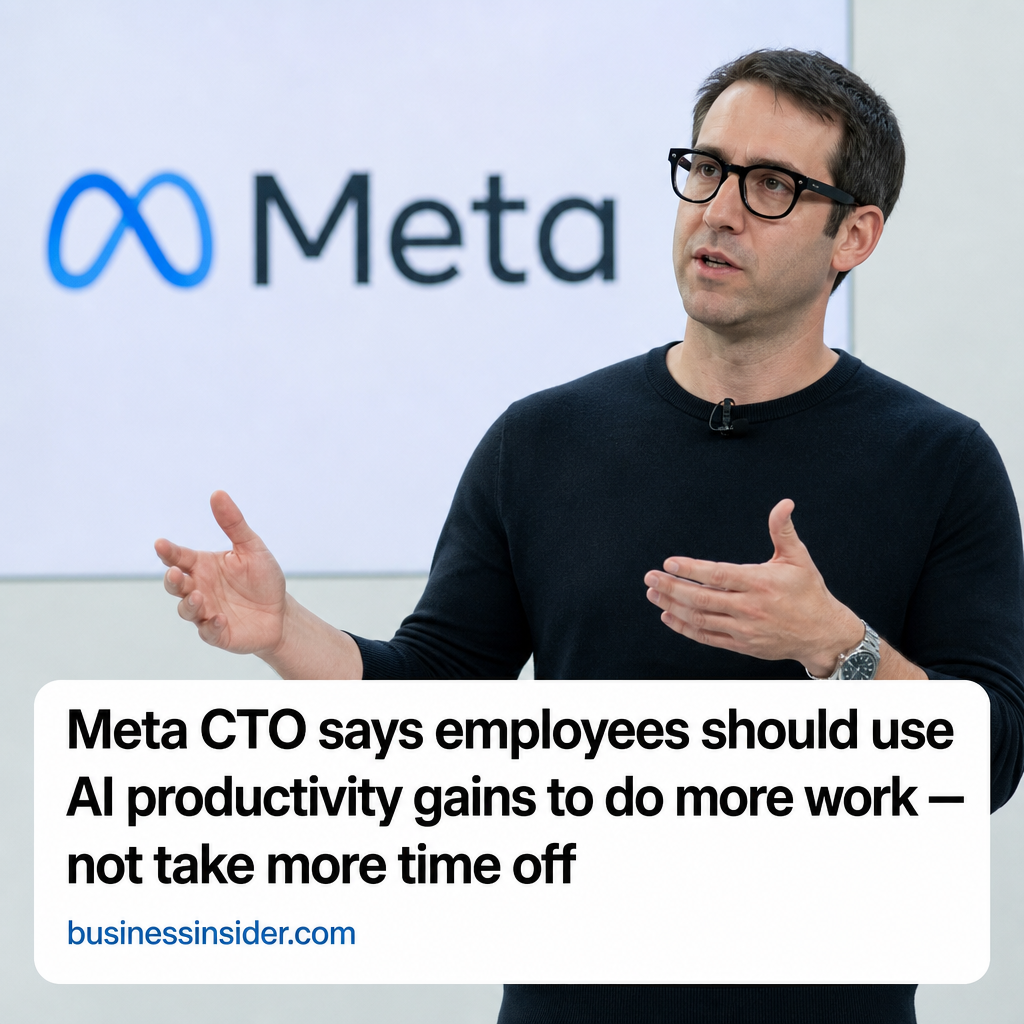
The advent of artificial intelligence (AI) in the workspace has been nothing short of revolutionary, altering how tasks are approached and executed. During a recent disclosure, Meta’s Chief Technology Officer (CTO) emphasized not taking more time off due to AI-assisted productivity, but rather using the freed-up time to accomplish even more tasks. This perspective sheds light on the evolving expectations of AI-augmented roles.
AI heralds an era where productivity gains can redefine workflows and team efficiencies across sectors. While some envision a future with reduced working hours, Meta’s vision suggests a paradigm shift where AI serves as a catalyst for achieving greater output, not as a justification to ease off workloads.

Revolutionizing Workplace Dynamics
The potential of AI to streamline processes and increase productivity is both exciting and daunting. On one hand, AI tools have the capability to handle repetitive tasks, analyze data swiftly, and provide insights that can accelerate decision-making. On the other, this technological prowess raises questions about the very nature of work and its future trajectory.
The Dual Edge of Technological Advancements
AI’s transformative power offers a double-edged sword: enhancing abilities yet demanding more from employees. By adopting AI, employees can perform complex tasks more efficiently, freeing them for higher-level strategic endeavors. However, this also implies the need for continuous upskilling and adaptation to evolving AI tools.
- Enhancement of analytical capabilities
- Streamlined communication within teams
- More strategic decision-making opportunities
AI in Action: Practical Applications in the Workspace
Numerous industries have already started capitalizing on AI-powered enhancements. From financial services using AI for fraud detection to healthcare employing AI in diagnostics, the paradigm of ‘do more with less’ is visibly taking shape.
Comparative Insights: Traditional vs. AI-Enhanced Productivity
The following table illustrates how AI implementations compare against traditional methods across various sectors:
| Sector | Traditional Productivity | AI-Enhanced Productivity |
|---|---|---|
| Finance | Manual transaction monitoring | Real-time fraud detection |
| Healthcare | Manual diagnosis | AI-driven imaging analysis |
| Retail | Human-managed inventory | AI forecasted supply chain management |
The Workforce of the Future
With AI at the helm, the workforce landscape is indeed on the brink of a transformation. Businesses are poised to harness AI-driven tools not only to optimize productivity but to redefine organisational roles and expectations.
Preparing for Tomorrow’s Challenges
Organizations must design strategies that align technological advancements with workforce needs. Employees, conversely, should embrace lifelong learning and adaptability to remain relevant in this AI-powered ecosystem.
- Continual learning programs
- AI upskilling workshops
- Flexible work policies converging with tech