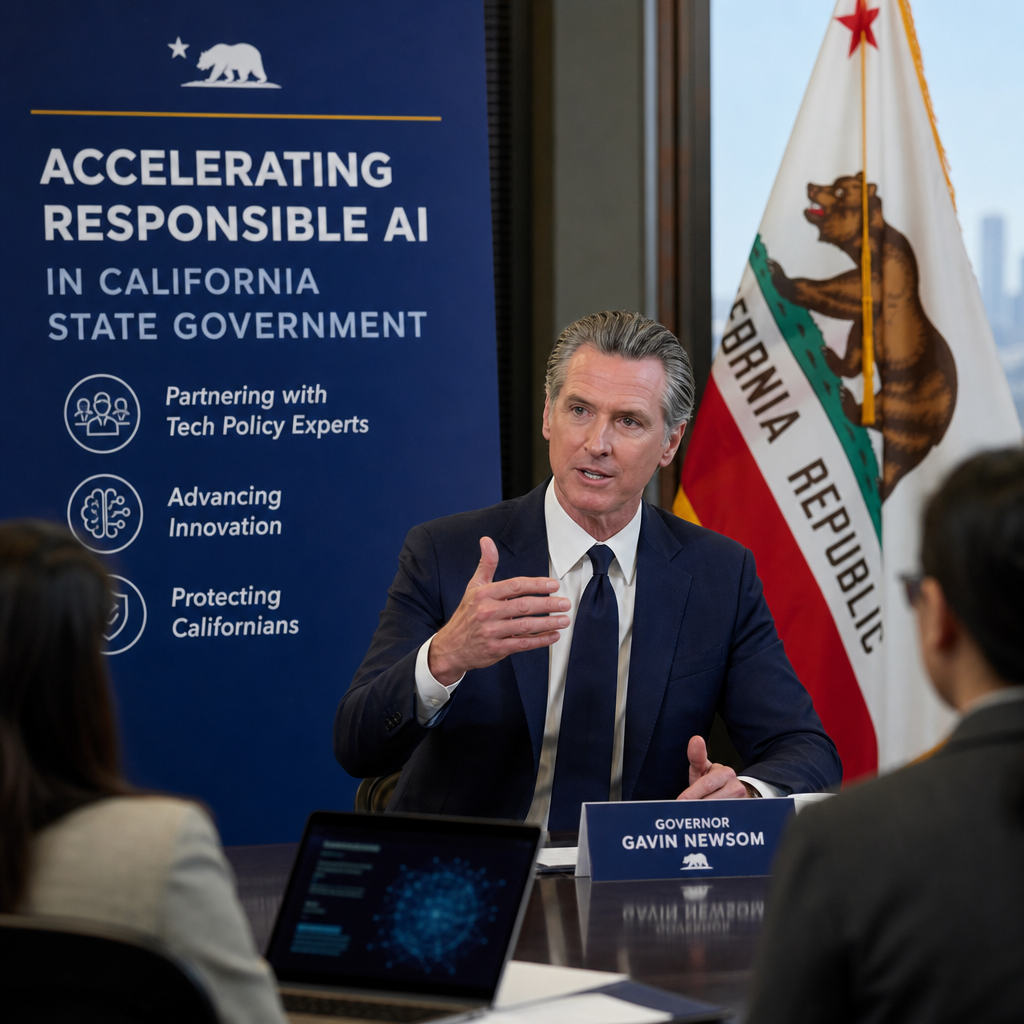
California’s Bold Move: Partnering with Tech Experts to Harness AI Responsibly
In a groundbreaking initiative, Governor Newsom has announced plans to collaborate with tech policy experts to drive the responsible use of artificial intelligence in California’s state government. This proactive approach is poised to set the stage for a new era of transparency, efficiency, and innovation in public service.
As AI becomes an integral part of various sectors, the state of California recognizes its potential to transform government operations. By engaging with experts in technology policy, the state aims to navigate the complexities of AI implementation while upholding ethical standards and public trust.

The Strategic Vision Behind the Initiative
Governor Newsom’s initiative seeks to leverage AI to enhance state services and operations. The collaboration with policy experts ensures that the deployment is both innovative and ethical, addressing concerns such as data privacy, algorithmic bias, and accountability.
This initiative is not just about adopting new technology. It’s about reshaping the framework within which technology operates, ensuring that AI services are inclusive, fair, and beneficial to all Californians.
Key Objectives of the Initiative
- Enhance the efficiency of government services through AI-powered solutions.
- Ensure ethical AI implementation by developing robust privacy and ethical guidelines.
- Engage tech policy experts to formulate clear guidelines and regulations.
- Promote transparency and accountability in AI-driven decisions.
Engaging Tech Policy Experts: A Collaborative Approach
The collaboration with tech policy experts is vital to the initiative’s success. By involving leaders from academia, industry, and civil society, California aims to benefit from a diverse array of insights and expertise.
This partnership will help the state government tailor AI applications that are responsive to real-world challenges, thereby ensuring that technological advancements align with public values and priorities.
The Role of AI in Government Operations
AI technologies hold promise for streamlining governmental processes, from automating routine tasks to improving data-driven decision-making. The state government seeks to harness this potential while mitigating risks associated with AI deployment.
Through targeted applications, AI can enhance resource allocation, improve service delivery, and foster innovation in public administration.
AI and Public Trust: Ensuring Accountability
Building public trust is paramount as AI systems become more embedded in governmental operations. The initiative emphasizes transparency, with strategies to clarify how AI reaches decisions and ensures that these systems remain fair and unbiased.
Developing a robust framework for AI accountability will address concerns about automated decision-making processes and safeguard citizens’ rights.
Benefits and Challenges: A Balanced Perspective
| Benefits | Challenges |
|---|---|
| Enhanced efficiency and productivity. | Navigating ethical and privacy concerns. |
| Data-driven insights for policy making. | Ensuring transparency and accountability. |
| Improved service delivery to citizens. | Addressing algorithmic biases. |
Looking Forward: The Future of AI in California
Governor Newsom’s initiative marks a pivotal step toward integrating AI into essential state functions. It ushers in a future where government services are not only more efficient but also more aligned with the digital age’s ethical considerations and challenges.
As California moves forward with this bold vision, it sets a precedent for other states and national governments to follow, ensuring that the evolution of technology in governance is both responsible and progressive.