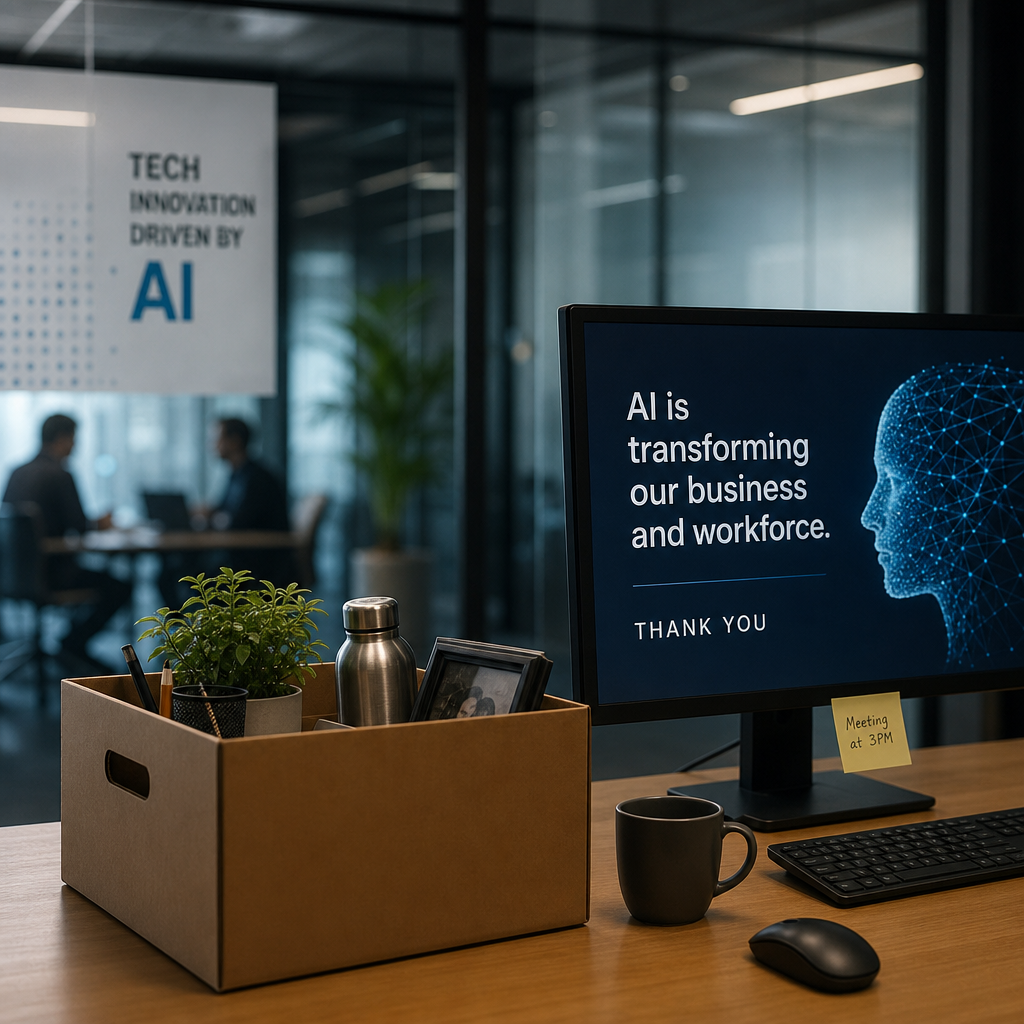
Is AI Replacing Tech Workers or Providing an Excuse for Job Cuts?
The discourse surrounding artificial intelligence (AI) has become increasingly pervasive across various industries, but nowhere is it more intense than in the tech sector. With advances in AI technology, fears of job displacement are mounting, raising crucial questions about the future workforce landscape. Are we seeing a genuine shift driven by technological necessity, or is AI being used as a convenient scapegoat to rationalize job cuts?
From automating mundane tasks to driving innovation, AI promises numerous benefits. However, the extent of its impact on the job market toggles between opportunity and threat. This context challenges us to distinguish between technology’s transformative power and its use as a pretext for workforce downsizing.

AI: A Tool for Efficiency or Downsizing?
The Promise of Automation
AI’s potential to enhance efficiency is one of its most touted benefits. By automating repeating and routine tasks, AI allows human workers to engage in more complex and creative activities. For example, tech workers can leverage AI-powered tools for coding assistance, significantly reducing development time and increasing productivity.
Startups to large corporations are deploying AI for data analysis, cybersecurity, and customer service improvements. This shift aims at streamlining operations, which theoretically enables companies to do more with less. However, while the promise of automation is alluring, its implications for employment cannot be overlooked.
Job Cuts: The Unseen Consequence
Critics argue that the actual effect of AI deployment may not match the optimistic forecasts given by many companies. Instead, it can serve as a means to justify job cuts in the name of ‘technological advancement.’ When leveraged merely as a cost-cutting tool, AI can lead to significant layoffs, as witnessed in industries like manufacturing which saw similar trends with robotics in the past.
Fears of downsizing are not unfounded as some organizations may find AI a tempting proposition for reducing workforce expenses. The ethical question arises: are tech companies using AI responsibly or exploiting it to boost short-term profits?
The Future Workforce: Adaptation or Replacement?
Acquiring New Skills
Amidst the wave of AI integration, a counter-perspective holds that AI will not eliminate jobs but rather transform them. This view suggests that workers will need to evolve by acquiring new skills and adapting to AI-driven workflows. Upskilling and reskilling initiatives are therefore becoming essential components of modern career paths.
Training programs are increasingly focusing on data science, machine learning, and AI technologies themselves. By equipping tech workers with relevant expertise, the workforce can pivot to roles that complement AI rather than compete with it.
Innovative Roles Created by AI
Interestingly, AI could give rise to entirely new career paths that we have yet to fully imagine. Positions like AI ethicists, human-AI interaction designers, and AI policy advisors exemplify how AI is ushering in unique occupational opportunities. These roles focus on managing, guiding, and optimizing AI applications in organizations.
Supporting this transformation through policy can promote sustainable employment, and industry leaders must champion the responsible use of AI to foster innovation while protecting jobs.
A Balancing Act: The Role of Companies and Policymakers
As AI continues to integrate into the tech sector, balancing automation with human labor demands thoughtful consideration from both companies and policymakers. Companies need to ensure transparency about AI’s role within their operations without over-inflating its necessity as a justification for layoffs.
- Implement ethical guidelines for AI deployment.
- Partner with educational institutes for workforce training.
- Communicate openly about AI’s business role and impact on employment.
Government Intervention
On the policy front, governments should enact frameworks that facilitate positive AI integration. This can include incentivizing training programs, establishing regulations to protect workers, and promoting research in AI ethics. Collaboration between public and private sectors will be vital to ensure that AI’s advancement aligns with societal well-being.
As AI technology continues to evolve, individual and collaborative efforts are needed to ensure that it serves as a tool for empowerment, not exclusion.
| Aspect | Potential Impact |
|---|---|
| Efficiency | Increased productivity and operational cost savings. |
| Job Creation | Development of new tech-intersecting roles. |
| Displacement | Risk of layoffs within traditional tech roles. |
| Skills Requirement | Need for continuous reskilling and education. |